Biggest Lexar Workflow Go Buying Mistakes (And How to Avoid Them)
The Lexar Workflow Go positions itself as a compact solution for photographers, videographers, and content creators who need to move media quickly and reliably in the field. For buyers who rely on fast card offloads, multiple-device compatibility, and straightforward backup workflows, it can seem like an obvious purchase. However, several recurring mistakes show up in buyer decisions that either reduce the device’s usefulness or introduce unnecessary risk into an otherwise simple process.
This article examines the most common pitfalls encountered when purchasing a Lexar Workflow Go, analyzes how the device typically performs in real-world scenarios, and provides a practical buying guide to help readers make an informed choice. Whether the buyer is a travel photographer shooting RAW stills, a wedding shooter managing multiple cards per hour, or a drone operator looking for fast, reliable offloads, these tips will help avoid frustrating surprises.
Quick product analysis: What the Lexar Workflow Go aims to solve
The Lexar Workflow Go is built to simplify mobile media management: it usually combines card reading, temporary storage, and a user interface (either via a mobile app or direct USB-C connection) so media can be offloaded from cameras without a laptop. In field use, its intended value lies in speed, convenience, reduced dependence on a laptop, and the ability to create on-the-spot backups.
Real-world use cases where such a device is attractive include:
- On-location event photography where the primary workstation is impractical to set up.
- Travel and landscape photographers who want to free up cards between shoots without packing a laptop.
- Videographers capturing long clips on CFast/CFexpress or SD cards, needing quick offloads to a single hub to continue shooting.
- Drone pilots and adventure shooters who want rugged portability and quick transfers.
Buyers typically care about three things above all: reliability (data safety), speed (actual transfer throughput), and compatibility (cards, codecs, and host devices). Misunderstandings about any one of these lead to the most common purchasing mistakes.
Common buying mistakes — and how to avoid them
1. Confusing theoretical card speeds with real-world transfer rates
Buyers often see card speed ratings (e.g., UHS-II, V90) and assume the Workflow Go will always match or exceed those numbers. In practice, the device’s internal controller, the card slot type, and the interface to the host (USB-C, Wi‑Fi) determine transfer throughput. Overlooking this can lead to slow offloads during time-sensitive shoots.
How to avoid it: Check the Workflow Go’s supported card interfaces and documented throughput. If the workflow relies on extreme speeds (e.g., high-bitrate video or burst RAW), choose a device or workflow that explicitly supports those speeds or plan to use a high-speed USB-C connection to a laptop.
2. Assuming single-device storage equals backup
One of the most dangerous assumptions is believing that copying files to a single Workflow Go unit provides sufficient redundancy. A single device can fail, be lost, or be damaged in transit.
How to avoid it: Implement a 3-2-1 mindset in the field: at least three copies of critical data, on two different media, with one off-site when possible. Use the Workflow Go as one copy and copy simultaneously to a second device (portable SSD, laptop, or cloud via a tethered phone) when practical.
3. Ignoring power and battery limitations
Mobile workflow devices often have internal batteries to support card offload and wireless features. Buyers expecting all-day autonomy sometimes find battery life shorter than needed, particularly when powering external SSDs or using wireless transfers for hours.
How to avoid it: Verify typical battery life under realistic use (card offload + file verification). If extended sessions are planned, pack external power (USB-C PD power banks) and confirm the device supports pass-through charging or powering attached drives.
4. Overlooking software and compatibility with existing tools
Hardware matters, but so does software. Buyers may assume that a mobile app or built-in interface will seamlessly integrate with Lightroom, Capture One, or other desktop tools. Incompatibilities, missing metadata handling, or non-standard folder structures can slow post-processing.
How to avoid it: Review the device’s app capabilities and file management behavior. Confirm whether the device preserves folder structure, writes correct timestamps and metadata, and supports simple exports to the platforms used regularly. If necessary, test the app with a few sample files before deploying on a paid shoot.
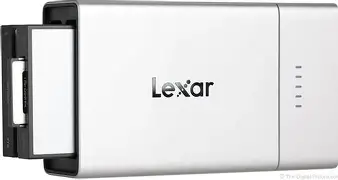
5. Neglecting card format and slot compatibility
Photographers use a variety of card types—SD, microSD, CFexpress, CFast, UHS-II SD. Purchasing a reader that doesn’t accept the card used by the primary camera is a costly oversight.
Looking for the best Laptops & Computers deals on Amazon?
Shop Amazon →How to avoid it: Audit the camera gear and card types used most frequently. If multiple card types are used across gear, consider a reader that supports those formats or bring a small selection of adapters and a secondary reader for less common card types.
6. Expecting laptop-level performance from a pocket device
There is sometimes an expectation that a pocket workflow hub will match a high-end laptop’s ports and raw power. While convenient, phones and compact hubs have limitations in sustained throughput, thermal behavior, and simultaneous device support.
How to avoid it: Be realistic about the device’s role—field quick-offloads and temporary backups are its strengths, not long-term storage or heavy editing. For heavy transfers and cataloged backups, plan to use a laptop or desktop when available.
7. Disregarding ruggedness and environmental needs
Devices used outdoors may be exposed to dust, moisture, heat, and drops. Some buyers assume lightweight equals rugged without verifying build durability.
How to avoid it: Check IP ratings, shock resistance claims, and user reviews for real-world durability. Use protective cases and weatherproof pouches if operations regularly occur in challenging conditions.
Detailed product review and practical assessment
Design and portability: The Workflow Go is designed to be pocketable, with thoughtful slot placement and a minimalist user interface. This makes it convenient for photographers who move from location to location and need quick, repeatable offload procedures.
Connectivity and interfaces: The device typically offers a USB-C port for wired transfers and charging, along with wireless connectivity for phone/tablet offloads. Wired transfers are preferable for large-volume or time-sensitive work; wireless works well for quick mobile previews and on-the-go culls.
Performance in the field: Under controlled conditions, small-to-moderate offloads (tens of gigabytes) complete reliably. For very large video files or simultaneous multi-card transfers, expect diminishing returns unless the hub explicitly supports the highest card standards and host interfaces. Thermal throttling under sustained transfers can surface in hot conditions.
Software and file handling: A clean, user-centered app is a major enabler. Look for features such as checksum verification, customizable folder naming (date, card ID, shoot name), and metadata preservation. The less manual intervention required, the faster the post-shoot workflow can resume.
Durability and warranty: The build feels adequate for travel; however, long-term reliability depends on usage patterns. Check warranty terms and support responsiveness—these matter when data integrity is at stake.
Pros & cons
- Pros:
- Portable and compact—ideal for quick offloads without a laptop
- Consolidates multiple card offloads into a single device
- Convenient for travel photographers and small crews
- Typically user-friendly software for basic file management
- Cons:
- Single-device backup is not redundancy—risk of data loss if used as sole copy
- May not match top-tier card speeds under sustained loads
- Battery life can be limiting for extended sessions
- Compatibility and software integration vary; verify before a critical shoot
How Lexar Workflow Go stacks up: a practical comparison
Rather than focus on brands, it’s useful to compare common approaches buyers consider when deciding whether to buy a device like the Workflow Go.
| Feature | Workflow Hub (e.g., Lexar Workflow Go) | Portable SSD + Separate Card Reader | Laptop-Based Offload |
|---|---|---|---|
| Portability | Very high—single pocket device | High—but two items to manage | Low—bulkier, needs power and stable surface |
| Redundancy | Depends—often single copy by default | Good—can copy simultaneously to SSD and laptop | Best—can maintain multiple copies and catalogs |
| Speed | Moderate—device-dependent; wired best | High—direct SSD connection often fastest | High—leveraged by laptop ports and drives |
| Workflow integration | Mobile-friendly but may need manual import later | Flexible—works with most host devices | Full—direct import into catalogs and editors |
| Power requirements | Low—battery-powered but limited life | Varies—SSDs often bus-powered, readers low draw | High—laptop battery or mains required for long sessions |
Buying guide: checklist and recommendations
Use this checklist when considering a purchase of a Lexar Workflow Go or any similar mobile workflow device. The guide emphasizes practical, real-world decisions.
1. Clarify the intended workflow
Decide whether the device is meant for quick previews and temporary offloads, or as a primary field backup. If it will serve as the primary backup, plan to add a second copy (portable SSD or laptop) immediately after offload.
Discover deals on Laptops & Computers — updated daily.
See Deals →2. Confirm card and file compatibility
List every card format used across cameras and drones. Confirm the device supports those formats without adapters. Also verify that file formats (large video files, proprietary RAW variants) are handled cleanly by the device’s app and by the target editing software.
3. Understand real-world transfer speeds
Ask for or find independent transfer benchmarks that include sustained transfer tests. If such numbers are unavailable, test the device with a representative card and files before relying on it in production.
4. Test battery life in realistic scenarios
Battery specs are useful, but real-world tests matter. Measure how many full card offloads can be performed on one charge, and whether the device supports connecting to an external power bank during operation.
5. Check software features and verification options
Prefer devices that offer checksum verification and customizable folder naming. These features reduce human error and help with consistent archiving later.
6. Plan for redundancy
Always have a secondary backup strategy: either a second physical device, a laptop, or (when network-connected) a cloud option. For critical jobs, eliminate single points of failure.
7. Evaluate build quality and warranty
Look for solid construction and clear warranty coverage. If the photographer expects harsh conditions, consider additional protective accessories such as weatherproof pouches or a dedicated hard case.
8. Consider ergonomics and day-to-day convenience
Small touches matter: cable storage, clear LEDs, easy card insertion/removal, and a simple mobile app can speed up every shoot. Poor ergonomics create friction and can cost time during tight shoots.
9. Read independent user reviews
User reviews often reveal recurring issues such as app quirks, thermal behavior, or quirks in card compatibility that do not show up in marketing materials. Prioritize sources that test the device in workflows similar to the buyer’s own.
10. Price vs. value
Assess whether the device replaces other purchases or merely complements existing gear. If the buyer already carries a laptop and portable SSD, the incremental value of a workflow hub may be limited. Conversely, for ultralight travel setups, the convenience can be worth the premium.
Final thoughts and conclusion
The Lexar Workflow Go and similar devices can transform a mobile shooting workflow by providing quick offloads, simplified mobile previews, and a pocketable method for temporary storage. The most common buying mistakes are not inherent flaws in the hardware but rather mismatches between buyer expectations and the device’s real-world characteristics—transfer speed, redundancy, power, and software integration.
Making the right choice requires a frank assessment of how and where the device will be used. Buyers should verify card compatibility, test throughput under realistic conditions, and plan for backup redundancy rather than assuming one device equals a secure archive. With modest planning—checking battery behavior, confirming app features, and incorporating a secondary copy strategy—the Workflow Go can be a valuable tool in a photographer’s kit rather than a single point of failure.
When evaluated against the demands of specific shoots—weddings, events, travel, or video productions—the key is matching the device’s strengths to the needs: use it for speed and portability, but rely on tried-and-true backup strategies for data integrity. Doing so avoids the most common buying mistakes and ensures the Workflow Go serves as a dependable part of a professional workflow.