Biggest Quantum 800 Wireless Buying Mistakes (And How to Avoid Them)
The Quantum 800 Wireless sits in the conversation around high-end gaming headsets: wireless convenience, large earcups, and feature sets aimed at players who want both comfort and competitive audio performance. Yet shoppers who rush into a purchase often discover trade-offs after the return window closes. This article walks through the most common mistakes buyers make when choosing the Quantum 800 Wireless (or a similarly positioned wireless headset), analyzes the product from a practical point of view, and gives a clear, actionable buying guide so readers buy with confidence.
Introduction: Why buyers trip up
Gaming headsets are deceptively complex: a single product crosses multiple use cases — competitive online play, immersive single-player experiences, streaming, casual multimedia, and even remote work. That breadth invites confusion. Buyers focus on one good-sounding review or an attractive spec and miss why a headset might fail them in a real-world scenario. The Quantum 800 Wireless is popular enough that these missteps frequently surface: platform incompatibility, unrealistic battery expectations, fit and comfort problems, or misunderstandings about latency and surround features. This guide places those common mistakes front and center and pairs each with practical ways to avoid them.
Top buying mistakes and how to avoid them
1. Mistake: Assuming “wireless” equals plug-and-play on all devices
Many shoppers assume a wireless headset will work seamlessly with every platform. In reality, wireless headsets often use different connection methods (USB dongle, Bluetooth, or proprietary low-latency radios), and functionality can vary between platforms.
How to avoid it: Verify compatibility before buying. Check whether the Quantum 800 Wireless supports the connections needed for the intended use — for example, a USB wireless adapter for PC and consoles or Bluetooth for phones. Confirm whether features like chat/game mixing, surround sound, or mic monitoring require a particular platform or software.
2. Mistake: Prioritizing marketing features over practical performance
Features like “virtual surround” or “active noise cancellation” look good in a spec sheet but may not translate to a better experience for the buyer’s real-world use. Some virtual surround implementations emphasize “wide” sound at the expense of positional clarity important in competitive play.
How to avoid it: Define the primary use case. If the buyer wants competitive positional accuracy, prioritize low-latency wireless performance and a neutral sound profile. If immersion and cinematic depth are the goal, a headphone that emphasizes bass and spatial processing may be better. Read reviews that test the product in situations similar to your intended use.
3. Mistake: Underestimating fit and comfort for long sessions
Pictures don’t show pressure points or heat buildup. A headset that fits well during a short demo can become uncomfortable in a four-hour gaming session.
How to avoid it: Look for adjustable headbands, replaceable ear pads, and pressure distribution. If possible, try the headset in person or buy from a retailer with an accommodating return policy. Pay attention to materials: memory foam and breathable fabric differ from dense leatherette when it comes to temperature and long-session comfort.
4. Mistake: Ignoring microphone clarity and how voice processing is handled
A tidy dual-driver setup or a flashy earcup design means little if teammates can’t hear the user clearly. Some headsets rely heavily on software processing that changes voice character or reduces natural dynamics.
How to avoid it: Prioritize a headset with either a high-quality hardware mic or robust onboard mic processing that provides noise reduction without making the voice sound “canned.” Check examples of recorded speech in reviews. If streamers or content creation are part of the plan, consider how the mic sounds when fed into streaming software or a capture card.
5. Mistake: Overlooking battery life variability and charging workflow
Battery life is often specified as a single maximum figure, but actual hours vary with volume, lighting, active features (like noise cancellation), and whether Bluetooth and a second radio are active.
How to avoid it: Read real-world battery tests and confirm the charging method — USB-C, micro USB, or proprietary port. Consider whether the headset supports wired passthrough while charging or a detachable cable for wired use when the battery runs low.
Find top-rated Audio & Headphones products at great prices.
Shop Amazon →6. Mistake: Expecting firmware-free perfection
Wireless headsets are firmware-driven devices. Some issues (latency, micro-stutters, feature incompatibilities) get resolved in firmware updates; others persist without manufacturer support.
How to avoid it: Check the manufacturer’s history of firmware updates and customer support responsiveness. Look for a product that receives ongoing firmware improvements and transparent changelogs. Confirm whether companion apps are needed for full functionality and whether they’re available on the buyer’s platform.
7. Mistake: Choosing form over durability
Lightweight plastics and matte finishes look sleek in photos, but repeated adjustments, travel, and cable strain reveal weak points.
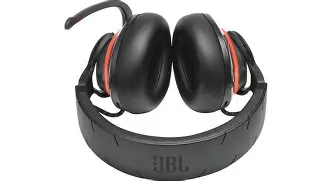
How to avoid it: Inspect build materials in hands-on reviews. Metal headband reinforcement, replaceable parts, and a clear warranty policy are indicators of longevity. If the headset will be transported frequently, look for a case or a well-protected travel option.
Quantum 800 Wireless: Product review and practical analysis
The Quantum 800 Wireless targets users who want a premium wireless headset with gaming-focused features. Below is an analysis structured around the real-world concerns buyers usually have.
Design and build
The Quantum 800 Wireless typically presents a solid balance between comfort and durability. Adjustable suspension and cushioned earcups aim to reduce clamp fatigue. In practice, the headset is suitable for extended sessions when combined with breathable padding; however, users with larger heads should verify fit because perceived pressure varies across individuals.
Connectivity and latency
For gaming, a low-latency wireless link is essential. The Quantum 800 Wireless generally provides a reliable wireless connection via a dedicated USB transmitter (or similar low-latency radio), which is preferable for PC and console gamers who need tight audio-to-action sync. Bluetooth support, when present, is convenient for mobile devices but often introduces higher latency, so it’s best used for chat or media rather than competitive gaming.
Sound signature and performance
The headset aims to deliver a punchy, immersive sound with emphasis on clarity for dialog and in-game cues. In real-world use, the Quantum 800 Wireless is well-suited for single-player immersion and mixed gaming use. Competitive players should verify whether the sound profile can be tuned via equalizer settings or companion software to emphasize mid-range and high-frequency cues important for footsteps and directional audio.
Microphone quality
Communication is central to multiplayer gaming. The Quantum 800 Wireless provides a boom microphone with noise-reduction processing to reduce background noise in shared spaces. For streamers and podcasters, an external dedicated microphone typically offers superior fidelity, but the built-in mic will suffice for team voice chat and casual streaming.
Battery and charging
Battery endurance is sufficient for many multi-hour sessions; however, actual performance varies by usage intensity and feature set (lighting, active processing, etc.). A practical buyer should plan for a regular charging routine and confirm whether the headset supports wired use while charging or provides a detachable cable to switch to wired mode when the battery is depleted.
Companion software and customization
Companion software often unlocks EQ presets, surround virtualization, and mic tuning. The Quantum 800 Wireless benefits from such software when users want to tailor sound for different games or media. Buyers who dislike installing additional software should confirm which core features work without it and whether key settings are available on the headset itself.
Find top-rated Audio & Headphones products at great prices.
See Deals →Real-world use cases
- Competitive multiplayer: Use the USB radio connection, tune the EQ for clarity, and minimize background apps to keep latency low.
- Couch console gaming: USB dongle or console compatibility offers a comfortable wireless experience from the sofa; Bluetooth can be used for mobile chat.
- Streaming or content creation: The headset mic works for live chat and quick streams, but a dedicated desktop microphone is recommended for best voice quality.
- Travel and commuting: If Bluetooth is available, the headset can double as a media headset, but buyers should check earcup seal and noise isolation if using it on planes or trains.
Pros & Cons
- Pros
- Comfort-oriented design suitable for multi-hour sessions
- Wireless convenience with low-latency options for gaming
- Feature-rich companion software for tuning (when available)
- Microphone optimized for team chat with noise-reduction processing
- Cons
- Feature availability can depend on platform and software
- Battery life fluctuates with active features; charging workflow matters
- Bluetooth mode may introduce latency, limiting competitive use
- Durability and fit vary between individual users — try before committing if possible
Comparison table: Quantum 800 Wireless vs alternatives
| Feature | Quantum 800 Wireless | Competitive Alternative A | Competitive Alternative B |
|---|---|---|---|
| Primary wireless | Dedicated low-latency radio (USB) and often Bluetooth | USB radio with solid latency performance | Bluetooth-first with optional low-latency dongle |
| Best for | Balanced gaming and media, long sessions | Competitive FPS players seeking positional precision | Casual gamers and media users who prioritize portability |
| Microphone | Removable/flip boom with noise reduction | Clear boom mic optimized for voice clarity | Built-in mic with emphasis on convenience |
| Battery | Multi-hour battery suitable for extended play | Long battery life with quick-charge options | Moderate battery; portable charging emphasized |
| Software features | EQ presets, surround virtualization, mic tuning | Advanced EQ and tournament modes | Basic EQ and firmware updates |
| Price tier | Upper-mid to premium | Premium | Mid-range |
Buying guide: How to choose the right Quantum 800 Wireless for your needs
This buying guide distills the practical checks to perform before purchasing the Quantum 800 Wireless or a similar wireless gaming headset.
1. Clarify the primary use case
List the top three activities the headset will be used for (e.g., competitive FPS, single-player immersion, streaming, commuting). If competitive play ranks high, lean toward low-latency radio mode and a flatter EQ. If immersion and media are priorities, consider headsets that emphasize a wider soundstage and richer low end.
2. Confirm platform compatibility and feature parity
Check which features are active on the intended platforms: console, PC, mobile. Some functionality (chat mixing, surround sound, software EQ) may require a Windows driver or a console-specific workflow. Don’t assume the USB adapter will deliver identical experiences across consoles and PCs.
3. Test for fit and long-session comfort
If possible, try the headset for an hour or more. Pay attention to clamping force, ear cup size, weight distribution, and heat buildup. If in-person testing isn’t possible, buy from a retailer with a customer-friendly return policy and read multiple user reports on comfort.
4. Evaluate microphone quality with real-world samples
Search for voice samples or video reviews that include microphone captures in noisy environments. Look for natural voice reproduction and effective noise suppression without heavy, unnatural filtering.
5. Understand battery behavior and charging options
Verify charging port type, whether the headset allows wired passthrough, and how long typical sessions will run on a single charge. Consider whether the headset supports quick charge or if a detachable cable is supplied for wired fallback.
6. Prioritize firmware and support track record
Inspect the manufacturer’s history of firmware updates and community feedback. A headset that receives frequent updates may have early bugs fixed and new features added. Confirm warranty terms and the availability of spare parts, like ear pads and cables.
7. Compare extra features carefully
RGB lighting, companion app extras, and bundled accessories are nice to have but should not override core factors like sound, mic quality, and comfort. If a specific accessory matters (carrying case, extra cables), verify whether it is included in the box.
8. Set a realistic budget
Decide what features are essential and which are optional. Investing in a solid headset can be more cost-effective than buying a cheaper model and upgrading later. Be mindful of diminishing returns: double the price does not always mean double the performance for your use case.
Common checklist before hitting “buy”
- Is the headset fully compatible with the primary platform(s)?
- Does the wireless mode provide sufficiently low latency for competitive play?
- Are the ear cups and headband suitable for long sessions?
- Does the microphone meet team-chat or streaming quality expectations?
- Are battery life and charging workflows acceptable for daily use?
- Is companion software required, and is it supported on the intended system?
- Does the manufacturer have a solid firmware update and support track record?
Conclusion
The Quantum 800 Wireless offers a compelling blend of wireless convenience and gaming-oriented features, but buyers who overlook platform compatibility, real-world battery behavior, fit, and microphone quality are often disappointed. The most useful approach is pragmatic: identify the headset’s primary role, validate compatibility and latency for that role, inspect comfort and build expectations, and consult hands-on reviews for microphone and battery performance. By avoiding the common mistakes outlined here and using the checklist as a decision framework, buyers will be far more likely to choose a headset that fits both their head and their needs — rather than one that merely looks good on a spec sheet.