Don't Buy the 38Gl950G B Until You Read This Full Analysis
Introduction
The 38Gl950G B arrives in a crowded category: large-format ultrawide monitors that promise to replace dual-monitor desktop setups for gamers, content creators, and productivity users. Before committing to a purchase, buyers should understand not only the headline specifications but also how the monitor performs in everyday situations, the compromises it entails, and whether it matches the buyer’s actual needs.
This analysis examines the 38Gl950G B from multiple angles: design and ergonomics, panel characteristics, performance for gaming and professional work, connectivity and ecosystem concerns, and long-term ownership factors. The goal is to give readers an evidence-driven, practical guide so they can decide whether this monitor is the right investment for their desk and workflow.
Product overview and what it promises
The 38Gl950G B positions itself as a premium 38-inch curved ultrawide intended to blend immersive gaming with desktop-level productivity. On paper it typically lists a high native resolution appropriate for wide-format workflows, a high refresh rate and adaptive-sync support for smooth gaming, and a color-capable panel suitable for creative tasks. It also emphasizes a large horizontal workspace that reduces the need for multi-monitor setups.
Those promises translate into three core buyer expectations:
- Immersive gaming experience: high refresh rate + low latency + adaptive sync to reduce tearing and stutter.
- Productivity and multitasking: a wide canvas for side-by-side documents, timelines, spreadsheets, and IDEs.
- Content-creation suitability: accurate color reproduction and consistent viewing angles for photo/video editing.
Detailed analysis
Build, design, and ergonomics
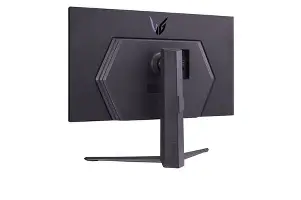
Physically, the 38Gl950G B follows the modern curved-ultrawide template. Its large, sweeping curve is designed to keep the edges within a comfortable viewing angle, which helps reduce head movement when working across wide timelines or spreadsheets. A full-featured stand—if included—usually offers height, tilt, and swivel adjustments; this is essential because the monitor’s size makes correct positioning critical for comfort and image uniformity.
Practical considerations:
- Desk depth and mounting: A 38-inch ultrawide requires a deep desk or a strong monitor arm; VESA compatibility should be verified if the stand is not adequate.
- Cable routing and port access: The monitor should provide accessible ports on the rear or underside; buyers will appreciate a clean routing path for power, HDMI/DisplayPort, and USB peripherals.
- Materials and finish: Matte bezels and textured plastics reduce reflections and fingerprints; a glossy logo or RGB accent may be present but is cosmetic.
Panel characteristics and image quality
At this size, panel choice determines the monitor’s strengths and weaknesses. The 38Gl950G B is typically offered with an IPS-type or similar wide-angle panel, which provides consistent color and viewing angles across the screen. This is important for team reviews, collaborative editing, and any situation where more than one person may view the display simultaneously.
Key image-quality aspects to examine in real-world use:
- Resolution and pixel density: A 38-inch ultrawide generally aims to balance horizontal workspace with readable text. The pixel density should keep UI elements sharp without forcing scaling on the OS.
- Color gamut and calibration: Wide gamut coverage (e.g., near-sRGB/AdobeRGB percentages) makes the monitor useful for photo and video work. Out-of-the-box calibration varies; a hardware or professional calibration session may be necessary for color-critical work.
- Uniformity and backlight behavior: Large panels sometimes show slight variations in brightness or subtle clouding; buyers should check return policies in case samples show noticeable uniformity issues.
- HDR capability: Many monitors in this space advertise HDR; real-world HDR quality often depends on local dimming or peak brightness rather than nominal HDR support. For compelling HDR, look for good peak brightness and zone control; otherwise HDR may be a limited enhancement.
Gaming performance
For gamers, the 38Gl950G B’s appeal is the wide field of view and the immersive curve. The core gaming considerations are refresh rate, input lag, pixel response time, and adaptive-sync support.
Find top-rated Electronics products at great prices.
See Deals →Real-world points:
- Refresh and adaptability: A high native refresh rate (e.g., 120Hz or above) combined with adaptive-sync reduces visible tearing and improves perceived smoothness. This is particularly beneficial in fast-paced titles and flight/racing simulators where peripheral vision matters.
- Input latency and response: Large VA-like panels can sometimes show slower pixel transitions than small 24–27" gaming screens. The result is ghosting or trailing in rapid motion; in practice, this varies sample-to-sample, and “motion” modes or overdrive settings can mitigate the effect.
- Field of view and competitive play: Ultrawide advantages vary by game and the platform’s support. Many single-player and open-world titles visibly benefit from the extended FOV, while competitive eSports titles can be less compatible or may give different sightline advantages that are disallowed in tournament settings.
Professional and productivity use
Where the 38Gl950G B shines is in single-screen productivity. The extra horizontal pixels allow multiple full-size windows to sit side-by-side without scaling. Video editors and audio engineers appreciate the longer timeline, which reduces horizontal scrolling. Developers and financial analysts can display code, documentation, and terminal windows concurrently.
Considerations for professionals:
- Ergonomics: The curve can help reduce neck turn, but long workflows still require correct vertical placement and distance to avoid eye strain.
- Color workflows: If color grading is a priority, confirm the monitor’s factory calibration and whether it supports 10-bit processing and hardware LUTs. For the most demanding color tasks, a dedicated reference monitor may still be necessary.
- Multi-OS scaling: High horizontal resolutions sometimes require OS scaling; verify how well your operating system and key applications scale text and UI elements at a comfortable viewing size.
Connectivity and extra features
A modern ultrawide should include at least one DisplayPort and one or two HDMI inputs, ideally a USB-C or Thunderbolt option for single-cable laptop connections. Built-in USB hubs, audio outputs, and ergonomic buttons add to day-to-day convenience.
Practical checks:
- Does the monitor support daisy-chaining or MST for multiple displays?
- Are the USB ports downstream-powered for peripherals and charging?
- How is the on-screen display (OSD) navigated — a joystick or buttons?
- Are firmware updates available and easy to apply?
Pros & Cons
- Pros
- Expansive horizontal workspace that replaces dual-monitor setups for many users
- Immersive curved experience that enhances single-player gaming and flight/racing sims
- Likely good color reproduction and viewing angles for collaborative work
- Potential for high refresh rates and adaptive-sync for smoother gameplay
- Reduced bezel clutter and single-cable workflows (if USB-C/DP Alt Mode is present)
- Cons
- Large footprint; requires ample desk space or an adjustable monitor arm
- Potential for backlight uniformity issues on large panels
- HDR performance may be limited without high peak brightness or local dimming
- Competitive gamers may prefer smaller, faster 24–27" panels with higher pixel response
- Higher price point compared to 27–34" alternatives and possible need for a powerful GPU to drive high refresh at native resolution
How the 38Gl950G B stacks up: a quick comparison
| Attribute | 38Gl950G B | Typical 38" Ultrawide | Typical 34" 144Hz Ultrawide |
|---|---|---|---|
| Workspace | Very wide; excellent for side-by-side apps and timelines | Similar—designed for productivity | Smaller horizontal space, but still roomy |
| Gaming | High refresh + adaptive-sync focus; immersive | Varies widely by model | Often faster pixel response; favored by competitive gamers |
| Color & Professional Use | Generally strong; good for creators with calibration | Varies; some prioritize gamut over speed | Good color options available but smaller canvas |
| HDR | Basic to moderate HDR benefits unless high peak brightness and dimming present | Often similar limitations | Typically modest HDR; depends on backlight tech |
| Required GPU power | Higher due to larger pixel count at high refresh | High for native refresh rates | Lower total pixels; easier on GPUs than 38" |
| Desk & Mounting | Requires deep desk or arm; heavier | Same caveats | More forgiving footprint |
Buying guide: is the 38Gl950G B right for the buyer?
When considering the 38Gl950G B, buyers should weigh their priorities against the monitor’s strengths and trade-offs. Use this checklist to decide:
1. Purpose: gaming, productivity, or content creation?
- If the primary goal is immersive single-player gaming, the 38Gl950G B’s wide FOV and curve offer a compelling experience.
- For multitasking and productivity, the larger horizontal workspace can replace dual monitors and improve workflow efficiency.
- Content creators should validate color accuracy, bit depth support, and calibration options; if precise color is required, budget for a hardware calibration tool or a dedicated reference monitor.
2. Desk space and mounting
- Measure desk depth and width. Confirm VESA mount compatibility if planning to use a monitor arm.
- Consider the viewing distance: larger monitors require slightly greater distance to avoid perceivable pixel structure and to maintain comfortable head movement across the curve.
3. GPU and performance expectations
- Confirm whether the current GPU can drive the monitor at desired resolutions and refresh rates in target applications or games.
- Test or estimate frame rates for demanding games; consider lowering in-game settings or using adaptive-sync to smooth gameplay if necessary.
4. Port selection and peripheral needs
- Look for DisplayPort 1.4 (or later) and the latest HDMI standard supported to ensure high refresh + high resolution operation.
- USB-C/Thunderbolt with DisplayPort Alt Mode is a strong convenience feature for laptop users—check power delivery levels if expecting laptop charging.
5. Warranty, returns, and sample variation
- Large panels can have sample-dependent uniformity; choose a retailer with a generous return window and verify warranty coverage for dead pixels and backlight defects.
- Buyers who are particular about uniformity or color should test the unit at home and be prepared to request a replacement if defects are evident.
6. Calibration and color workflow
- If color-critical work is part of daily tasks, plan for calibration. Check whether factory calibration reports are provided and whether 10-bit processing and LUT support are available.
Real-world use cases and what buyers typically care about
Examining concrete scenarios helps translate specs into expectation management.
Content creator: video editor
A video editor will value the long timeline and the ability to keep source footage, preview, and effects panels visible simultaneously. Color-critical grading requires confirming gamut and calibration; the 38Gl950G B will serve well for editing and layout work, but final grade verification on a studio reference monitor is recommended for broadcast work.
Discover deals on Electronics — updated daily.
See Deals →Professional multitasker: software developer or analyst
For developers and financial analysts, the ability to have code, documentation, and a terminal side-by-side reduces context switching and increases productivity. The curved format can help keep the eyes centered while scanning long files.
Gamer: single-player / immersion-focused
Players looking for immersion in narrative-driven or simulation titles will appreciate the expanded FOV and cinematic aspect ratio. If competitive, latency and pixel response must meet expectations—benchmarks or hands-on testing are advisable.
Home office and mixed use
For mixed-use households where work, media consumption, and occasional gaming share a single device, the 38Gl950G B provides versatility. Adjustability, clean cable management, and a simple input switching process become practical priorities.
Final considerations before purchasing
Buyers should do the following final checks:
- Read recent user feedback focused on uniformity and backlight behavior for the specific panel batch.
- Confirm return policy and warranty duration for the retailer or manufacturer.
- Ensure the GPU and cables in use support the monitor’s target resolution and refresh rate simultaneously (use DisplayPort or certified HDMI cables as required).
- Plan for calibration if the work requires precise color rendering; otherwise, test the monitor’s out-of-the-box appearance to see if it meets expectations.
Conclusion
The 38Gl950G B is a compelling option for buyers seeking a single-display solution that blends immersive gaming with true desktop-level productivity. Its large curved canvas and feature set make it attractive for creators, multitaskers, and players who value immersion. That said, larger panels bring practical trade-offs: a heavier footprint, potential uniformity variation, and higher GPU demands at native resolution. Prospective buyers should weigh desk space, intended primary use, and GPU capability, and plan for possible calibration or sample variance.
In short, the 38Gl950G B can be an excellent purchase for the right user—but not everyone needs a 38-inch ultrawide. Those who prioritize compact setups, absolute competitive gaming performance, or the absolute best HDR experience may find other options more suitable. For users who want immersive single-screen workflows and are prepared for the physical and performance considerations outlined here, the 38Gl950G B is worth a close look—just be sure to validate a sample’s uniformity and to confirm compatibility with the rest of the system before committing.