Samsung Galaxy S25 Edge Specs, Features, and Value: Is it worth the price tag?
Introduction
The Samsung Galaxy S25 Edge arrives into an already crowded flagship market with an emphasis on a premium curved display, high-end cameras, and a polished software experience. For buyers who prize a blend of cutting-edge hardware and everyday practicality, the S25 Edge positions itself as Samsung’s statement device for those who want both spectacle and substance. This article examines the handset’s core specifications and features, evaluates real-world performance across common use cases, and weighs whether the S25 Edge justifies its price compared to close alternatives.
Overview of key specifications
At a glance, the Galaxy S25 Edge targets the top tier of the smartphone market. The headline specs typically emphasized in flagship devices of this generation include:
- Display: 6.6–6.8 inch curved LTPO OLED, QHD+ resolution, adaptive refresh rate up to 120Hz
- Processor: Region-dependent flagship SoC (Snapdragon/Exynos class), with advanced NPU for on-device AI
- Memory & storage: Configurations from 8–12GB RAM and 128GB–1TB storage
- Cameras: Triple-lens rear array with high-resolution main sensor, ultrawide, and optical telephoto; advanced computational photography
- Battery & charging: ~4,500–4,800 mAh battery with fast wired charging (around 45W), wireless charging, and improved power management
- Build & durability: Aluminum frame, Gorilla Glass Victus-class front and back, IP68 dust/water resistance
- Software: Samsung One UI with multi-year Android update promise and flagship-level features such as DeX-style continuity, advanced multitasking, and on-device AI capabilities
Detailed product analysis
Design and display: a refined curved experience
The S25 Edge’s most visible feature is its curved-edge OLED. Compared with flat-screen equivalents, the curve delivers a more immersive look and a feeling of continuity between glass and metal. Samsung’s edge panels historically allow quick access to shortcuts and widgets; on the S25 Edge this utility is refined and less intrusive than earlier iterations.
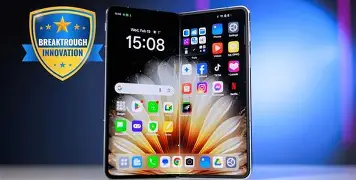
For everyday users, the display translates to excellent reading, streaming, and gaming. The LTPO backplane enables the refresh rate to scale down when static content is shown and scale up to 120Hz when scrolling or gaming, balancing fluidity with battery life. High peak brightness ensures outdoor legibility, and color calibration from the factory tends to be accurate, making it suitable for content creators and media consumption alike.
Performance and thermal behavior
Flagship silicon in the S25 Edge is expected to deliver smooth UI interactions, instant app launches, and competent gaming performance at high frame rates. The presence of an advanced NPU (neural processing unit) improves AI-driven tasks like photo processing, voice recognition, and background processes without a large battery penalty.
Thermals are critical in curved, compact designs. Samsung’s approach typically includes a vapor chamber and layered graphite solutions to spread heat. In real-world mixed use—social apps, navigation, music, and occasional gaming—the device should remain comfortable in hand. Prolonged heavy gaming or benchmarking can still cause throttling, but the cooling solution aims to minimize that compared to previous generations.
Cameras: versatility and computational photography
The camera system on the S25 Edge is built for versatility. The main sensor captures high-resolution stills with good dynamic range in daylight. Night and low-light performance rely heavily on sensor size, pixel binning, and software processing to reduce noise and preserve detail. The ultrawide lens typically offers minimal distortion and a wide field of view suitable for landscapes and group shots.
Optical telephoto remains a differentiator. A 3x or higher native optical zoom provides usable detail without resorting to heavy cropping, and hybrid zoom (combining optical and computational zoom) extends reach for distant subjects. Video performance tends to be strong—stabilized 4K recording, real-time HDR processing, and cinematic modes are often included to appeal to vloggers and casual videographers.
Discover deals on Mobile Phones — updated daily.
View Offers →Battery life and charging
Battery life is a key consideration for buyers. The S25 Edge’s battery capacity, paired with efficient silicon and adaptive refresh rate, generally delivers a full day of heavy use or longer for moderate users. Power users—who game for hours, use GPS navigation continuously, or stream video extensively—may need to top up before the end of day.
Fast wired charging reduces downtime, and wireless charging plus reverse wireless charging remain convenient for accessories. Samsung’s battery health management features help preserve capacity over time with adaptive charging routines.
Software, updates, and ecosystem
Samsung’s One UI continues to be a strong selling point: it’s feature-rich, customizable, and integrates well with other Samsung devices like tablets, watches, and laptops. Buyers who already own Samsung accessories will find continuity features (file sharing, call/message sync, device control) valuable.
Equally important is long-term software support. Samsung’s multi-year Android update pledge reduces the cost-of-ownership anxiety for buyers who plan to keep devices for multiple years.
Real-world use cases
For everyday users: The S25 Edge is a polished all-rounder—excellent for social media, streaming, and photography. The curved display makes reading and swiping more engaging without compromising everyday comfort.
For mobile photographers and videographers: The camera flexibility—wide, ultra-wide, and telephoto—paired with computational processing makes the S25 Edge a strong content-capture tool for social creators who shoot and edit on the phone.
For business and productivity users: Large screen real estate, Samsung’s multitasking tools, and good battery life help with email, document editing, and remote meetings. DeX-like features and strong software update commitments also serve professionals planning multi-year use.
Pros & Cons
- Pros:
- Premium curved AMOLED display with adaptive refresh for smooth visuals and efficient battery use
- Versatile camera array that handles daylight and low-light scenarios well
- Strong performance with modern SoC and dedicated NPU for AI tasks
- Comprehensive software features and multi-year update commitment
- Durable build quality and water resistance suitable for everyday life
- Cons:
- Curved screen can make screen protectors and case choices more limited or more expensive
- Premium price compared with near-flagship alternatives offering similar value
- Edge glare/reflections in certain lighting and occasional accidental touches for some users
- Battery life under sustained heavy load may lag behind some larger-battery competitors
How the S25 Edge compares (quick reference)
The table below offers a high-level comparison between the Galaxy S25 Edge, the S25 flat variant, and a typical competitor in the flagship space. Exact model names and specs can vary by region and configuration; consider this a concise framework for buyers to compare priorities.
Find top-rated Mobile Phones products at great prices.
View Offers →| Feature | Galaxy S25 Edge | Galaxy S25 (flat) | Competitor (typical flagship) |
|---|---|---|---|
| Display | 6.6–6.8" curved LTPO OLED, QHD+, 1–120Hz | 6.2–6.5" flat LTPO OLED, QHD+, 1–120Hz | 6.3–6.7" flat/curved OLED, 120Hz |
| Processor | Top-tier Snapdragon/Exynos (region dependent) | Same class as Edge | Comparable flagship SoC |
| RAM & Storage | 8–12GB / 128GB–1TB | 8–12GB / 128GB–1TB | 8–12GB / 128GB–1TB |
| Rear cameras | 50MP main, 12MP ultrawide, 3x telephoto (typical) | Similar setup, slightly different tuning | Similar triple/quad setups; varies by brand |
| Battery | ~4,500–4,800 mAh / Fast wired & wireless | Similar capacity, slightly longer life in larger non-edge bodies | Ranges widely; some rivals have larger batteries |
| Durability | Aluminum frame, Gorilla Glass, IP68 | Same | Most flagships match this |
| Price Position | Premium (edge price premium vs flat) | Slightly lower than Edge | Competitive |
Buying guide: who should consider the S25 Edge?
1. Buyers who value display and feel
If the tactile experience and premium look matter—curved glass, near-seamless edges, and an immersive panel—the S25 Edge is attractive. Users who watch a lot of video, read long-form content, or appreciate a phone that feels luxurious in hand will appreciate the Edge treatment.
2. Mobile photographers wanting flexibility
For creators who frequently rely on the phone as their primary camera, the S25 Edge’s combination of hardware and computational processing offers convenience: broad focal range, robust night modes, and stable video capture. However, those seeking absolute DSLR-level control or extreme telephoto reach might prefer specialized camera-centric devices.
3. Power users and multitaskers
Large screen real estate combined with Samsung’s multitasking features, excellent app switching, and strong multi-year software support make the S25 Edge suitable for professionals who need a reliable, long-term device for email, documents, and on-the-go work.
4. Buyers who should consider alternatives
- Budget-conscious shoppers who prioritize price over a premium curve should consider flat-flagship or near-flagship models that sacrifice little in everyday performance.
- Users who want the best possible battery life at all times may find larger-battery devices or phones with less power-hungry screens more suitable.
- Anyone who frequently uses cases and screen protectors and dislikes the fitment challenges of curved glass might prefer a flat-screen model.
Practical tips before buying
- Check regional chipset differences: Samsung sometimes ships different SoCs by region. Research which processor is available in your market if benchmarks and efficiency matter to you.
- Try the curved screen in person: A curved display is aesthetic, but some users report accidental touches or reflections. Trying a demo unit helps determine personal comfort.
- Consider storage needs: If the device lacks expandable storage, opt for higher storage tiers if one captures many photos or keeps large media libraries.
- Cases and protection: Curved glass requires case compatibility checks—purchase protective accessories from reputable third parties if durability is a priority.
- Software update policy: Verify Samsung's current update commitment for the model—longer update windows increase the device’s value over time.
Value assessment: is it worth the price tag?
Whether the Galaxy S25 Edge is worth its price depends on buyer priorities. For those who place a premium on display quality, premium materials, and the polished One UI experience—plus a versatile camera system—the S25 Edge often justifies a premium. The value proposition strengthens for buyers who will leverage the device over multiple years, thanks to update commitments and long-term reliability.
Conversely, if price sensitivity is high and the curved display is primarily aesthetic rather than functional for the buyer, similar performance and camera results can be achieved by flat-flagship models or slightly older-generation flagships at reduced prices. In other words, the Edge premium buys refinement and certain conveniences—not necessarily core performance that is dramatically different from its flat counterpart.
Conclusion
The Samsung Galaxy S25 Edge is a flagship that emphasizes a premium display experience, capable photography, and a full-featured software ecosystem. It is well suited to users who want a phone that looks and feels luxurious, offers versatile imaging, and receives multi-year software support. The price tag is justified for buyers who value those attributes and plan to use the device as a long-term daily driver. For those focused purely on raw value—maximum battery life per dollar or the lowest price for high performance—there are alternatives that may better match those narrower priorities. Ultimately, the S25 Edge stands out as a thoughtfully engineered flagship that rewards users who appreciate design, display, and polish in their smartphone experience.